East West College of Pharmacy, Bengaluru, organised a Training of Trainers (ToT) Programme on Implementing Outcome-Based Education (OBE) under the National Education Policy (NEP) 2020 on 22nd September 2026. The programme was organised for faculty members with the objective of strengthening teaching and learning practices in line with outcome-based education principles.
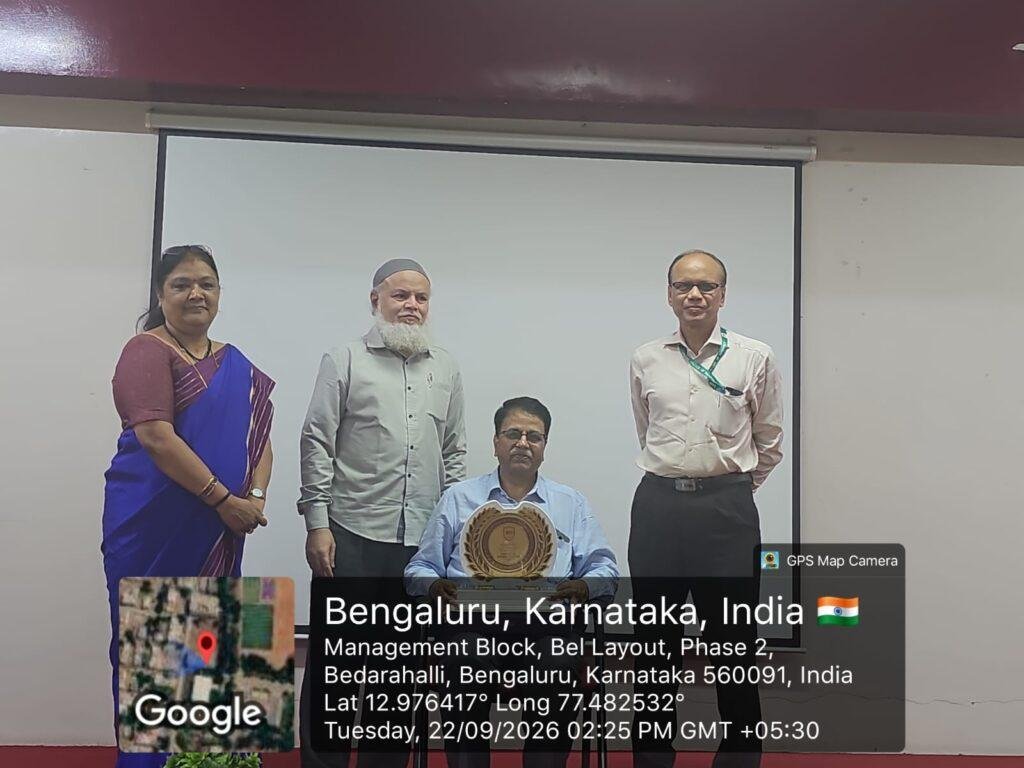
The programme featured Prof. (Dr.) B. M. Patil, Professor of Practice, Shree Dhanvantary Pharmacy College, Kim, Gujarat, as the resource person. His expertise and professional experience provided valuable insights into the effective implementation of outcome-based education in pharmacy education. The session provided valuable insights into the integration of Outcome-Based Education (OBE) into pharmacy education, with emphasis on aligning teaching, learning, and assessment practices with defined learning outcomes.
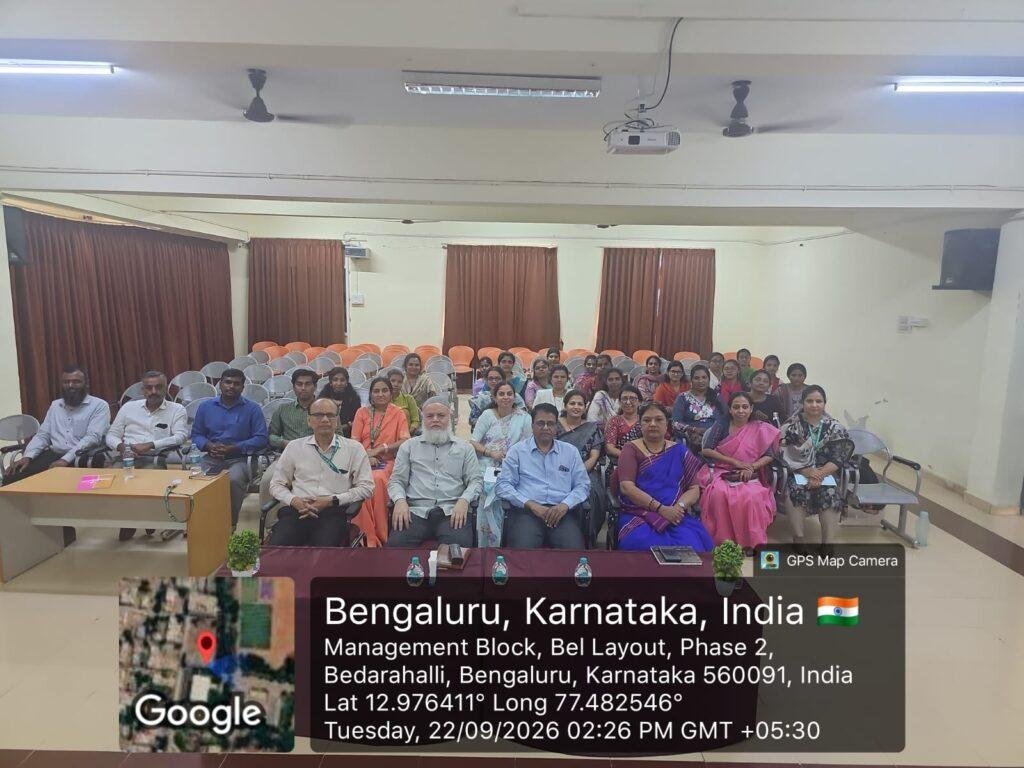
The programme covered the formulation of learning outcomes, effective pedagogical strategies, continuous assessment, and student-centric teaching approaches. Key provisions of the National Education Policy (NEP) 2020, including curriculum reforms, digital learning, holistic development, and quality assurance, were also discussed. The session highlighted the role of faculty members in enhancing teaching effectiveness, promoting student engagement, and ensuring continuous improvement in academic practices.
The programme concluded with a vote of thanks by Dr. Purnima Ashok, Dean (R&D), East West Group of Institutions (EWGI), who acknowledged the resource person’s contribution and appreciated the participation of the faculty members.
The programme reinforced East West College of Pharmacy’s commitment to continuous faculty development, academic excellence, and quality enhancement in higher education. It served as a platform for strengthening faculty competencies in outcome-based teaching, learner-centric pedagogies, and effective assessment practices. The insights gained are expected to support the systematic integration of OBE principles into curriculum delivery and evaluation, thereby contributing to improved teaching effectiveness, measurable student learning outcomes, and sustained institutional quality enhancement.